
Frequently Asked Questions
-
It’s the group of muscles that lines the bottom of the pelvis. They provide continence (for both pee and poop!), support for your pelvic organs and stability of the spine and pelvis. These muscles need to be healthy and functional for sexual activity as well.
-
Cancellations made within 48 hours of your appointment will be charged 50% of the visit fee. Cancellations made within 24 hours will be charged 75%. If you do not cancel before your appointment begins, it will be considered a no-show and the full visit fee will be charged.
-
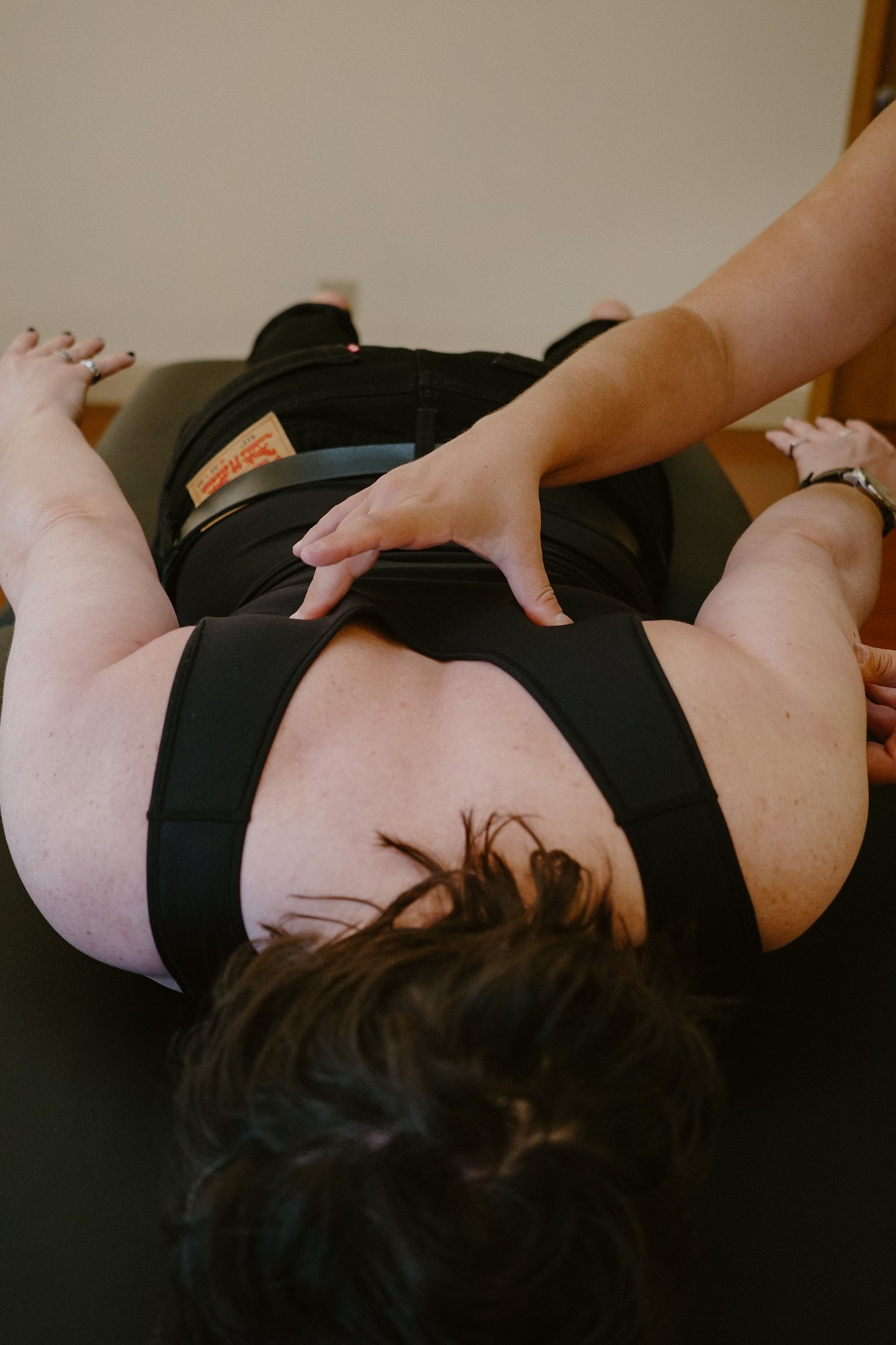
Plan for 75 minutes. We’ll review your forms, talk through your concerns, and complete a physical assessment. Depending on your needs, this may include strength testing, functional movements such as breathing or squatting, and palpation of muscles, fascia, and joints.
For pelvic floor concerns, I may recommend an internal vaginal or rectal exam to assess pelvic floor strength, coordination, tension, and laxity. This is always optional and will only be performed with your consent.
We may also begin treatment and practice exercises, stretches, breathwork, or behavioral strategies based on what we find. Please ask questions at any time. I’ll explain my reasoning so your care makes sense to you and you can participate fully in every decision.
*Please use the restroom before your appointment so we can make the most of our time together. It’s located just outside the clinic door.
-
One-on-one with Dr. Natalia Martinez—no assistants, aides or techs
50–55 minutes
We’ll check your progress, review and adjust your home program, and decide together what to prioritize. Depending on your needs, we may continue assessing what’s contributing to your symptoms, use manual therapy to address tension or restrictions, or focus on coordination, strength, and skill-building.
The goal is lasting improvement, not just short-term symptom relief. It may take several sessions to understand all the factors contributing to the problem and determine what helps.
Please note, it may take several sessions of investigation to identify the root source of the issue.
-
Depending on your symptoms and anatomy, the exam may be vaginal or rectal. With your consent, I use one gloved, lubricated finger—no speculum or stirrups—to gently assess the pelvic floor muscles for tension, strength, and coordination. I’ll explain what I’m doing throughout, and you can pause or stop at any time- no need to explain why.
-
That’s completely your decision, and I will never pressure you to have one. We can often use external assessment and treatment or, when appropriate, I can teach you techniques to perform yourself. I’ll be honest about what information or treatment an internal exam could offer, and we’ll make a plan that respects your boundaries and goals.
-
You can say “Let’s stop”, “I need us to end the exam” or “I’m no longer comfortable” and you don’t need to tell me why. It will help me provide better care if you can provide feedback but sometimes internal work just triggers memories/feelings you don’t want to share and that’s totally ok.
-
Yes! During pregnancy, we can work on pain and discomfort, staying active, core strength, leakage, abdominal-wall changes, pushing practice, labor positions, reducing the risk of tearing during vaginal birth, and preparing for vaginal or Cesarean birth. The goal is to help you stay active and comfortable throughout pregnancy and feel prepared for delivery.
Please note that I wait until the second trimester to begin internal work.
-
Yes! Childcare can be hard to access, so please bring your child if that’s what helps you get here. Children can sometimes be distracting, but we’ll work together to make the session productive.
Depending on your child’s age, they can stay in a stroller, car seat, or chair. For babies, I also have a Pack ’n Play with a bassinet and changing table, along with padded floor mats for tummy time and floor play. The Pack ’n Play is set up with a fresh sheet for each child, and the Pack ’n Play and floor mats are cleaned between uses.
-
It depends on several factors, including your chronicity, general health, stress, sleep, and the time and energy you have available between visits.
We’ll decide together what frequency will best support lasting change—not only reducing your symptoms, but addressing what contributes to them to help prevent them from returning. At the end of each session, we’ll review what we found, what it means, and what comes next, so you always know where you are in the process.
-
Depending on your symptoms, Kegels may be unhelpful or even make things worse. If pelvic floor strengthening is appropriate, I’ll determine whether we need to work on strength, speed, endurance, or coordination and tailor your exercises to the exam findings. Your program may also include muscles outside the pelvic floor to improve how the whole system works together.
-
Yes. They aren’t necessary for every condition, but longer sessions may be helpful for complex concerns or if you’re traveling from farther away.
-
Yes. Internal work can still be performed during your period, but it’s completely fine to skip it if you prefer. There are always other things we can work on during your visit.
-
Yes! There’s still plenty to do, learn, and discuss. Maybe we need to simplify the program, make it fit your life better or progress you to new exercises. Come on in and we’ll find out!
-
Wear comfortable clothes you can move in, such as athletic or leisure wear. Please avoid jeans or other thick materials, which can limit movement and make assessment more difficult. Bring sneakers if your session may involve running or jumping.
-
Yes! And anyone else for that matter. Keep in mind that we may discuss sensitive matters such as bowel, bladder and sexual function. They can join us for all or part of the session, up to you.
-
As soon as you feel ready! We’ll wait to perform an internal exam until you’ve been cleared by your medical provider, usually around 6–8 weeks postpartum, but there’s plenty we can work on before then.
-
To make the most of our time together, please allow enough time to park and use the restroom before your appointment.
Metered street parking is usually available within a block of the office. If Addison Street is full, try Center Street one block over, or look for free parking in the residential area west of Martin Luther King Jr. Way. The Promenade parking garage next door costs about the same as street parking, but it closes promptly at 5 p.m., so please don’t use it for later appointments.
The lot in front of the building is reserved for tenants, except for the accessible parking spaces. My office is on the ground floor.
-
I don’t use an EMG biofeedback machine. These machines can pick up activity from nearby muscles and display it as pelvic floor activity. They detect electrical activity but cannot tell whether the pelvic floor is moving in the right direction, so bearing down may be mistaken for an effective contraction.
Instead, I provide real-time feedback through touch, verbal coaching, and visual cues. This also allows us to move off the table and practice during activities that resemble your daily life rather than keeping you connected to a machine.
-
Your previous experience gives us a great starting point. We’ll review what was tried, how your body responded, what helped, and what didn’t so we don’t have to start from scratch or repeat an ineffective approach.
I don’t assign stock programs based on a symptom or diagnosis. I investigate how different parts of your body may be contributing, test my findings, and track your response. If something isn’t helping, we won’t keep doing it—we’ll figure out why and change course. Because every visit is one-on-one, I can keep adapting your care as we learn more.
-
I’ll always try. Please let me know what would help you feel comfortable and safe, such as dimming the lights, using lighter pressure during manual treatment, providing extra explanation, repeating information, checking in for consent more frequently, or wearing a mask. If there’s something I can change or offer, please ask.
-
Nope! In California, you can see a physical therapist for up to 12 visits or 45 calendar days—whichever comes first—without a referral. After your evaluation, I’ll send your plan of care to your physician for approval. You don’t need to arrange anything beforehand.
-
Duende is an out-of-network practice and does not bill insurance directly. Working outside the insurance model allows me to provide:
Longer appointments: 75-minute evaluations and 50–55-minute follow-ups.
Care directly from your physical therapist: Every minute is one-on-one with me—never an assistant, aide, or tech.
Visits based on your needs: We choose the number and frequency based on your progress, not an insurer’s standard visit limits.
The freedom to look beyond one body part: I can address all relevant factors rather than limiting care to an insurer-approved diagnosis or body region.
I can provide a superbill—an itemized receipt you can submit to your insurance, HSA or FSA for possible reimbursement. Not all plans reimburse for out-of-network care, so please check your benefits beforehand.
If you have a high-deductible plan, you may already be paying out of pocket for in-network visits until you meet your deductible. Depending on the provider’s rate, seeing me may cost less than receiving care through a higher-cost clinic or hospital system.
If cost is a barrier, sliding-scale visits are available.
Please note: Federal law does not allow physical therapists to opt out of Medicare. Because Duende is not a Medicare provider, I cannot accept cash payment or provide a superbill for services that Medicare covers.